


In the wave of digital marketing, WhatsApp has become a key channel for businesses to reach global customers and build personalized communication bridges. However, many brands face challenges such as complex technical setup and unclear strategic planning in the initial stages, preventing them from fully leveraging marketing effectiveness. This article provides a clear “operational guide,” covering everything from enterprise API configuration to the construction of a systematic marketing framework, helping you lay a solid foundation for successful WhatsApp marketing and establish your brand’s authoritative position in the professional field.
I. Building a Solid Technical Foundation: Enterprise API Setup and Account Management
The WhatsApp Business Account is the core of a business’s messaging experience, where all phone numbers, message templates, interactive flows, and product catalog management are handled. A well-designed account structure is essential for efficient operations. A business can create multiple Meta Business Portfolios, each of which can hold one or more WhatsApp Business Accounts, and each account can be configured with multiple phone numbers. However, we strongly recommend that businesses rationally control the number of business accounts, as this helps consolidate data analysis, streamline management processes, and provide customers with a continuous and coherent conversational experience. At the same time, linking your product catalog to your account enables you to send rich messages featuring single or multiple products, enhancing interaction and engagement.
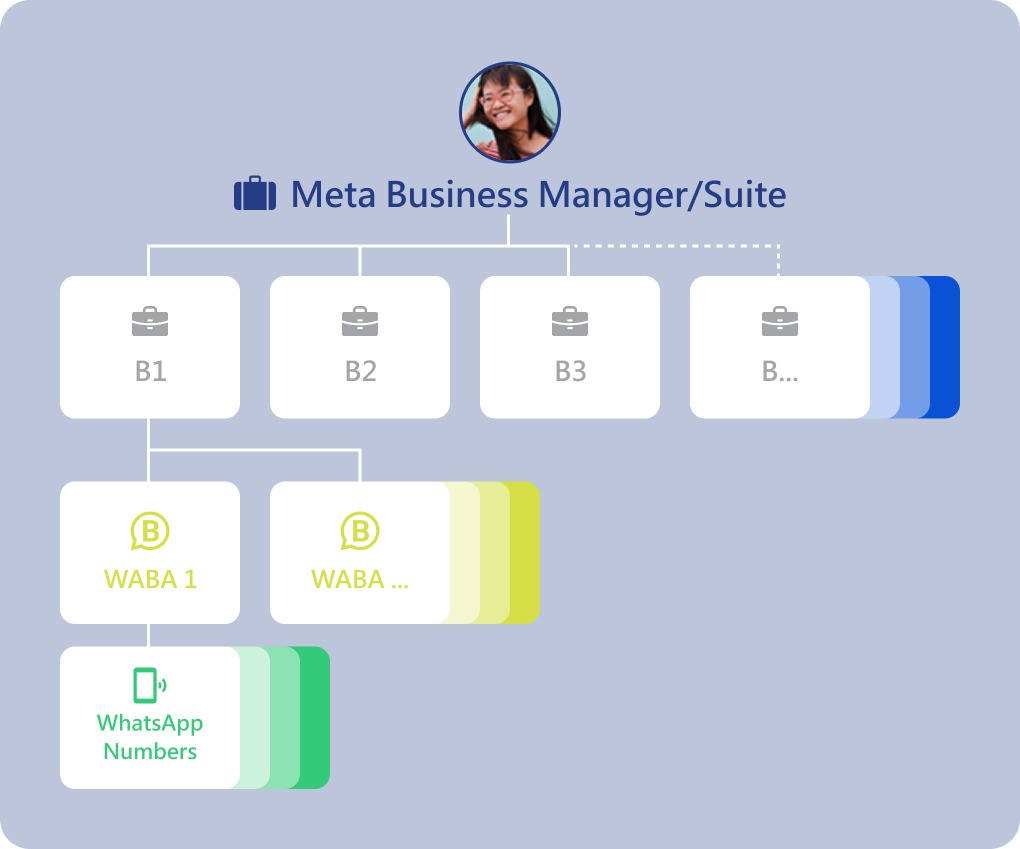
Source: Meta website/report.
To achieve more powerful functionality and automation, businesses should consider deep integration of the WhatsApp Business Platform with their existing technology stack. This can create a richer customer experience, thereby strengthening customer relationships. For example, integrating with a Customer Relationship Management (CRM) system provides complete customer history for every interaction; connecting a knowledge base enables automated responses to frequently asked questions via chatbots; linking a booking system allows automatic sending of tickets or confirmations post-purchase; and syncing with inventory systems can notify customers in real-time about product availability. Your business messaging partner (such as XGATE) can assist in integrating various internal systems to co-create innovative, customized solutions.
II. Planning Forward-Looking User Subscription and Engagement Strategies
After technical deployment is complete, developing a customer-centric subscription and engagement strategy is crucial. The starting point of any strategy should always return to the customer experience itself: from the customer’s perspective, what kind of content do they wish to receive? What information truly attracts them, fosters loyalty, and enhances brand affinity? Successful engagement lies not in the frequency of messages but in their relevance and value.
To this end, businesses should strive to provide a seamless end-to-end experience. Through timely support responses, valuable information updates, and exclusive offers within continuous and coherent conversations, businesses can systematically nurture customer relationships. This means marketing should not be isolated promotional blasts but rather integrated services and communications at every stage of the customer journey. Leveraging advanced features like WhatsApp Flows, businesses can build rich interactive experiences within the chat, allowing customers to complete actions such as book appointments, customizing products, filling out forms, or registering for events without leaving the app—significantly improving conversion efficiency and user experience.
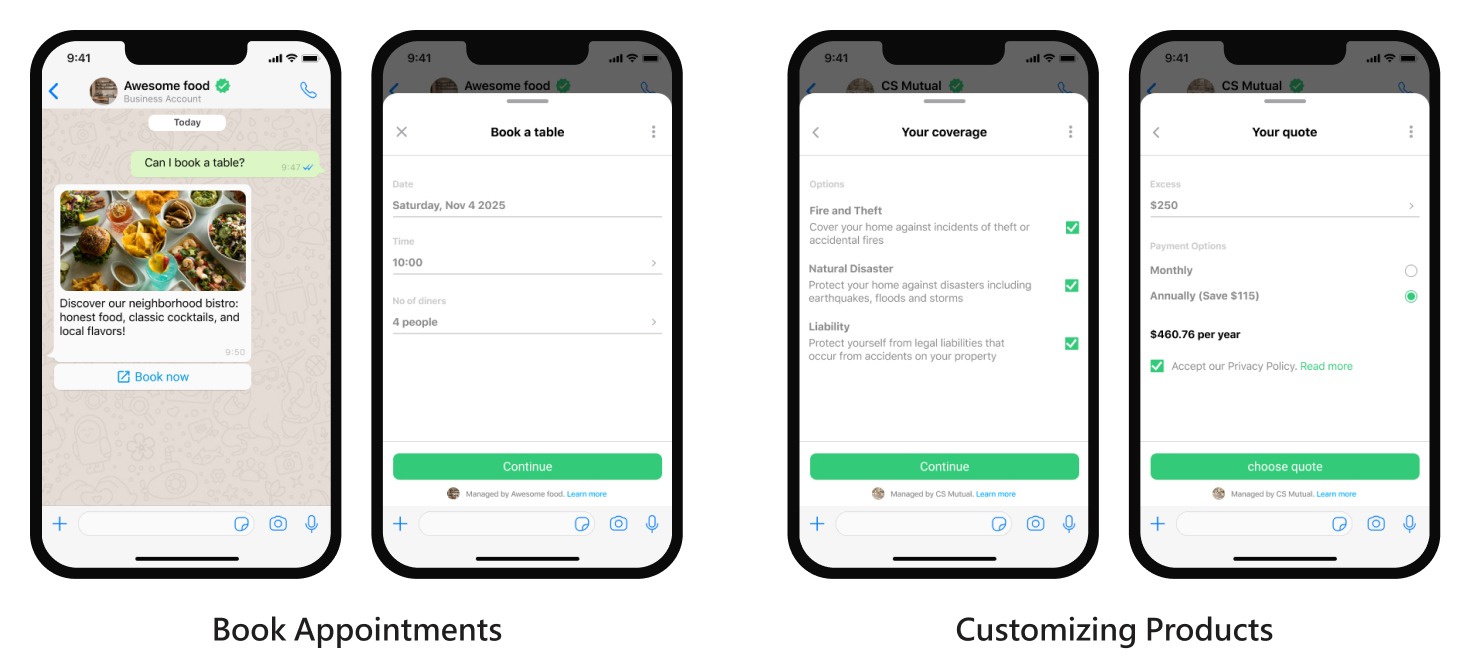
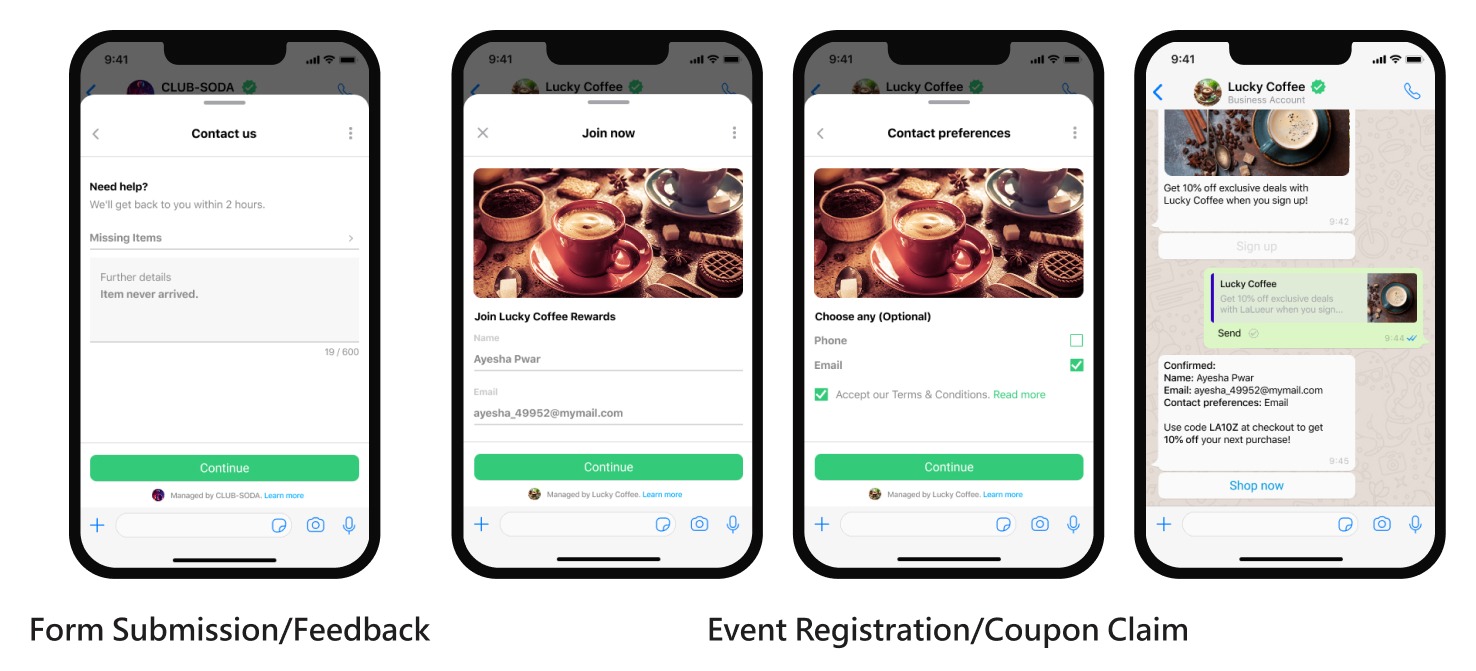
Source: Meta website/report.
III. Building a Systematic Marketing Campaign Framework
Effective WhatsApp marketing relies on careful planning and continuous optimization. A comprehensive marketing framework should cover core elements such as goal setting, audience insights, content planning, and performance evaluation.
First, engage in advance and integrated planning:
- Map out key seasonal peaks and critical business moments throughout the year, and consider how marketing messages can support and leverage these opportunities.
- Align WhatsApp marketing messages with broader online and offline marketing campaigns to create an integrated communication effect.
- Establish centralized strategy and management mechanisms to ensure messages sent by different teams are consistent and coherent, avoiding customer confusion from receiving excessive or contradictory information.
Second, create and send high-value marketing messages:
Marketing messages are not only suitable for promoting offers and events but can also be used to share new products, make announcements, express gratitude, collect feedback, or send birthday wishes. When creating messages, focus on personalization (e.g., using the {recipient_name} variable), multimedia elements (adding images or videos), and clear calls-to-action (including buttons to view catalogs, quick replies, make calls, or visit websites). Before sending, always preview the message to check its appearance and patiently await Meta’s content review process.
Finally, commit to testing and iterative optimization:
Marketing is a dynamic process of continuous improvement. Businesses should regularly test different messaging strategies, content formats, and sending times, evaluating performance against clear key performance indicators (KPIs) such as click-through rates, reply rates, and conversion rates. Through data analysis, identify what works and continuously iterate to gradually enhance the overall return on investment of WhatsApp marketing.
Transforming WhatsApp into a powerful growth engine requires professional technical integration capabilities, deep user insights, and systematic marketing planning. If you need support in setting up enterprise-level APIs, designing automated interaction workflows, or developing annual marketing strategies, the expert team at XGATE Digital Marketing Company can provide end-to-end services from technical integration to strategic planning. We are committed to helping brands navigate key channels like WhatsApp, build customer-centric conversational marketing systems, and achieve their business goals.
Contact XGATE today, and let us help you plan and launch an efficient WhatsApp marketing journey—turning every conversation into an opportunity for brand loyalty and business growth.